Monday, 9 May 2011

Evaluation

1) In what ways does your media product use, develop or challenge forms and conventions of real media products?
Our product challenges conventions in the contrast between the video and ancillary products. Usually the style will match, but ours contrast in a way that intentionally confuses the viewer, throwing them off guard and potentially increasing the emotional impact of the video. We used several conventions used previously in similar products, namely the Point-of-View style of shooting (seen in Gomez's 2006 music video for "See The World") and the gritty, dark atmosphere and themes, seen is many indie productions. I feel we developed this style to a point where it becomes darker and more gloomy than most videos of similar style.


2) How effective is the combination of your main product and ancillary texts?
Our music video and ancillary texts/products (Album Cover, Tour Poster) work well together. A theme of mystery and enigmas is prominent throughout both:


- In the video, we never see the person's face as it is shot point-of-view. This garners an atmosphere of mystery as it keeps you guessing as to who the person might be and what their story is. He/she is an enigma.
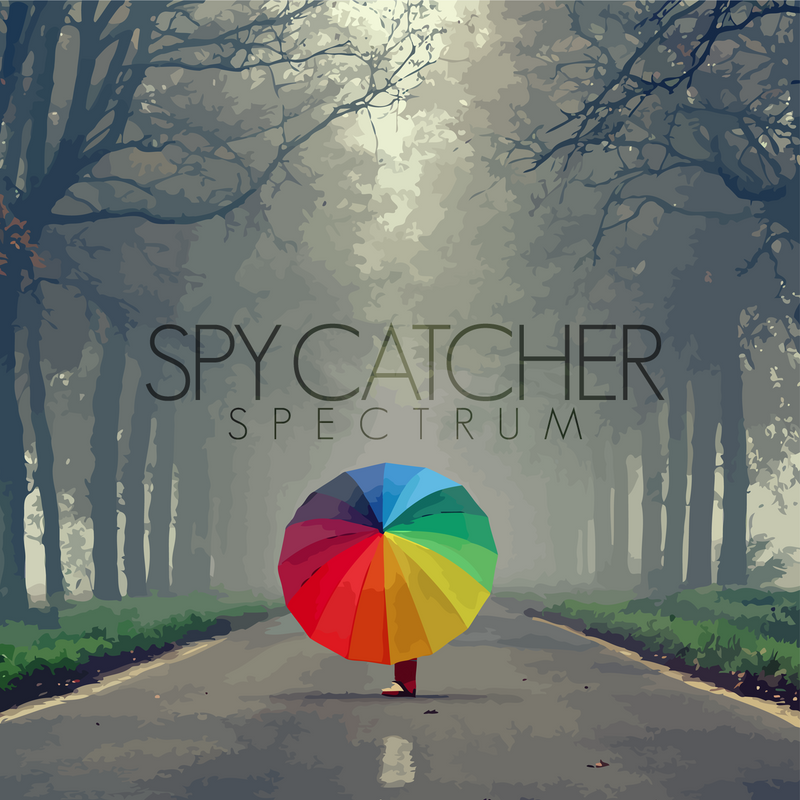
- Similarly, the Album cover/tour poster's main image of a person behind a colourful umbrella promotes the theme of mystery. On these and in the video it is left up to the viewer to interpret this theme as they see fit, whether it be creating a full back-story for this person, or as simple as trying to guess their gender.


A weakness in the comparison between our main product and ancillaries is that the shooting style won't necessarily match for some people. The video is dark and gritty, intentionally low-quality in parts whereas the Album cover and Tour poster are clean and professional-looking. An explanation for this, is that the music video represents only one song, which in itself has an indie, low-budget, gritty feel. The album cover and tour poster represents the whole album, which has an unknown style.


3) What have you learned from your audience feedback?
The main thing we learned from our audience feedback was that we needed to make the themes and plot of the video more clear. There is something to be said for letting an audience interpret something for themselves and take from it what they can but the response to our video showed we needed to give more clues as to what is going on, without making it obvious, which was our aim all along.


4) How did you use media technologies in the construction and research, planning and evaluation stages?


Research/Planning
Our group used various video sharing websites to research examples of music videos and their themes and ideas to use in our own video. Sites such as YouTube and Google Video were useful for this purpose.




We also used the Art/Design social networking website deviantart.com to find work we could potentially use for the artwork (our best option given the ease of contacting the artists and getting permission to use the images), and Google images to find examples of existing album art to take inspiration from.


Construction
We used a handheld camera without a tripod to get the best possible results in relation to our video's themes and feel. The shaky effect added to the low-budget and gritty feel. We edited in Adobe Premiere Elements, and the artwork was constructed almost entirely in Adobe Photoshop CS5, making use of vectormagic.com and a very small amount of Adobe Illustrator CS5 to import the vectorised images (more information on this in previous posts).


Evaluation

We used wordle.com to put together the image seen here, made up of the most popular responses to our video.

Sunday, 8 May 2011

Album Cover Inspiration/Research


Audience Feedback


We asked a group of our classmates to watch and comment on our video during one Media lesson. There were comments that the video was thought provoking, and that the ending was quite powerful. However, the ending was also said to be unclear. The main cirticisms were of the section with our main character walking towards the train platform as being too long, although the effect we put on to enhance the connotation of him being drunk was complimented as being effective. The other major criticism was of a filming error, when during the first section of the video, Paul is clearly seen putting his thumb over the mouth of a bottle before taking it back to drink from it. This was the worst filming error we made, but we unfortunately noticed too late into the editing process to go back and re-film this segment.

Final Video

The final video can be found here: http://youtu.be/Yn8mD79DObs

Friday, 18 February 2011

Audience Evaluation - Questionnaire Questions

1) How do you think we could improve the video?
2) What particularly did you like about it?
3) What particularly did you dislike about it?
4) How well did the music fit the content of the video?
5) What age group do you think this video suits best?
6) If you saw the video with no sound, which genre of music would you think it belonged to?
7) What gender group do you think this video suits best?
8) How powerful an effect did the end of the video have?

Wednesday, 26 January 2011

Album Name and Track List

Final Album Name: "Spectrum"

Track List
1. Stranger
2. Rock Is Cursed
3. Nothing Personal
4. Good Times
5. We're In Pieces
6. Fireworks
7. All My Life
8. No Other One
9. Where We Belong
10. Not Now
11. Conspiracy

Wednesday, 12 January 2011

Final Cover Stock + Edits

We decided to use the stock image "Somewhere Over the Rainbow" by meppol for our final album cover.

Original stock:


I used the website vectormagic.com to convert the original bitmap image to vector, which both gave the image it's "cartoony" look and allowed it to be enlarged as much as I liked without losing quality.


Vectorised stock:

Monday, 10 January 2011

Stock Image Permission Notes #2

All images courtesy of artists on deviantart.com. I have gained permission for two of the stock images from the album cover drafts post.

#2: "Somewhere Over the Rainbow" by meppol


Notes:

Me:
Hey Mary,

I have a favor to ask.

As part of my college course, I'm required to produce a concept for an album cover. It would be fantastic if I would be able to get permission to use one of your pieces as the main artwork, namely "Somewhere Over The Rainbow".

Of course I fully understand if you want to refuse. I know someone asking this out of the blue probably seems a little strange.

But yeah, if you can get back to me with an answer as soon as possible, I'd really appreciate it.

Thanks for your time.


Mary:
it is ok, you can use it

Stock Image Permission Notes #1

All images courtesy of artists on deviantart.com. I have gained permission for two of the stock images from the album cover drafts post.

#1: "Ten Thousand Memories" by Jon Damaschke (jonniedee)


Notes:

Me:
Hey Jon,

I have a favor to ask.

As part of my college course, I'm required to produce a concept for an album cover. It would be fantastic if I would be able to get permission to use one of your pieces as the main artwork. We're not 100% positive which one it is we'd like to use yet, but we're particularly interested in "Ten Thousand Memories" and "Hidden World".

Of course I fully understand if you want to refuse. I know someone asking this out of the blue probably seems a little strange.

But yeah, if you can get back to me with an answer as soon as possible, I'd really appreciate it.

Thanks again.


John:
Hey Jobe,

Thanks for getting a hold of me about this. I have a few questions for you before I can give an answer.

Will you be taking credit for my artwork, meaning will your college course think that you created the work? Or is it ok to use somebody else's work as a collaboration and will you be stating that when you present your album cover?

If you make sure to give me credit as the photographer/artist, then I don't see any trouble with it. If you create a final product, it would be really nice to see what you have done with it.

Thanks,

Jon


Me:
Thanks for getting back to me so quickly.

Yes, as part of the course we're also required to maintain a blog detailing the processes we go through including gaining permission for the artwork we use. So you will be fully credited on there as well as in small print on the final product itself.

Thank you so much for this. If it's not too much trouble (and if you have them), would you be able to send me the largest versions you have of the two pieces? I can definitely work with the uploaded versions but the bigger we can get the better really.

Thanks again.


John:
Alright, you can go ahead with it.

Friday, 10 December 2010

Album Cover: First Drafts


Yet to decide on Album name, hence literal titles at this point. All images taken from deviantart.com, from which we'll have to get permission to use them as a final album cover from their respective artists.

Wednesday, 1 December 2010

Crew/Equipment List

Equipment needed will be minimal due to the style (Point of View) of the video. We will be trying to make it as true to real life as possible so will be making use of natural props found around our filming locations. Filming equipment will be one handheld camera, a Panasonic SDR-S26, which will be lower in quality but this should work in our favor by giving a more gritty feel to the video.

Monday, 22 November 2010

Artist Info

Spy Catcher are a four-piece rock band from Watford, United Kingdom formed by former members of Gallows, Cry For Silence and Haunts. It is made up of the following members:

Steve Sears Jr - Vocals/Guitar
Mitch Mitchener - Guitar
Stu Gili-Ross - Bass
Alistair Gordon - Drums

'Music That My Dad Likes' received BBC Radio 1 unsigned track of the week and featured in Kerrang's 'Ten Songs You Should Hear Now'.

They have produced and rcorded all their own releases, including their debut EP "Rock Is Cursed", which came out on August 10th 2009.

The band have been known to distribute music for free; a digital version of the rare demo was given away for two weeks after selling out of physical copies before disappearing altogether and the title track of 'Rock Is Cursed EP' is also available.

Discography
"Demo" (2009, self-released)
Rock Is Cursed EP (2009, self-released)

Music Video Storyboard


Tuesday, 16 November 2010

Green Day - Basket Case (Music Video Analysis)

Link to video: http://www.youtube.com/watch?v=NUTGr5t3MoY

The video essentially follows the story of the song's lyrics. The name of the song itself is referenced in the video ("Basket Case" is a colloquial term for someone with a mental illness). The video begins by setting the scene in what appears to be a mental hospital of some sort given the heavy security doors and people dressed in white outfits. One such man enters a room carrying a guitar, a close-up is seen of the guitar being plugged in to an amp and as the shot progresses we see the room set up for a performance (mics, drums, amps etc) the lead singer is already standing there in front of the microphone. He is handed the guitar, and looks around the room and at the ceiling, seemingly bewildered and confused. He's also not wearing white clothes like the staff at the hospital. These things combined tell the audience that he is a patient.

The claim that the band are patients at the hospital is backed up immediately afterwards. As soon as the singer starts playing his guitar and the song starts, a gurney is wheeled in by nurses carrying the band's bassist, who gets off and starts playing, followed by a wheelchair holding the drummer, who is wheeled up to the drums and he too starts playing.

The prevailing theme in this video is surrealism, used to give the audience an experience more from the point of view of the patients inside the asylum in the video. Several things are used to convey this surreal atmosphere. In several shots, extras are seen wearing strange masks. On it's own this adds an element of un-reality, but those who remember the cult film "Brazil" (1985) will realise they're the same mask as the one worn by the "Torturer" character in the film. This adds an extra element of 'weirdness' to these individuals by bringing potentially frightening memories to the surface. The very fact that Green Day used this reference in the "Basket Case" video tells us that they're fans of the film, and therefore the fans watching the video are more likely to be, and therefore are more likely to 'get' the reference and the surreality within it. Short scenes depicting individual band members surrounded by floating (presumably imaginary) multi-coloured fish and eyes adds to the surreal effect. Research also reveals that the video was filmed in black & white and the bright, almost neon colours added afterwards to contribute to this surreal atmosphere.

The video contains numerous references to the novel "One Flew Over The Cuckoo's Nest" (1975 film), which was clearly an inspiration to the band. The nurse handing out the pills is similar aesthetically and in character to the villain in the film (also a nurse). The sequence depicting a patient's successful escape attempt by throwing a large object though a window and climbing through is an almost exact re-enactment of the scene from the book/film.

Monday, 15 November 2010

Red Hot Chili Peppers - Dani California (Music Video Analysis)

Link to video: http://www.youtube.com/watch?v=KP47oST_hAE&feature=fvst

The video for "Dani California", a 2006 single by the Red Hot Chili Peppers, documents the evolution of rock music through performances, on stage from the band, in a variety of settings and outfits resembling important figures and movements in the history of the genre. It is sometimes referred to as a quasi-chronology, meaning it only loosely follows the chronology, not following it to the letter. For example during the latter stages of the video when they're performing as themselves, the scene occasionally flashes back to previous eras which of course doesn't follow the chronological order.

The band mainly decided to depict eras, and as such their outfits are deliberately generic with little to no distinguishing features, but the video does contain homages to particularly important artists of the genre.

Timeline & Eras Referenced
0:00 
Rockabilly (reference to Elvis Presley)

0:26
British Invasion (reference to The Beatles)
0:37 
Psychadelia (reference to Jimi Hendrix)
0:57
Funk (reference to Parliament-Funkadelic)
1:22 
Glam (reference to David Bowie)
1:51 
Punk (reference to Sex Pistols)
2:03 
Goth (reference to The Misfits)
2:15 
Hair Metal (reference to Mötley Crüe)
2:48 
Grunge (reference to Nirvana)
3:02
Modern (RHCP themselves)


Weezer - Perfect Situation (Music Video Analysis)

Link to video: http://www.youtube.com/watch?v=jwv-iRvyDZg

The video opens with this title card. This connotes that the video will tell the story of the band before it's current iteration. More is revealed throughout the video about the specifics of the current and previous name but at this point people who know the band well may take the lack of an "R" in the bands name beforehand to mean that it's real-life, current lead singer, who is named Rivers, may not have been involved previously but is subsequently added to the line up, hence the addition of his first initial to the band's name. The video does in fact tell the story of how this addition came about. (It should be noted that this is fictional, no such changes were made to the name or band members. Rivers Cuomo has been their lead singer (and the band has been called Weezer) since their formation in 1992).

The raucous crowd with the bodyguard holding them back shows the band is still very popular even before they change their name/line up.


Rivers Cuomo, the band's real-life lead singer, is here depicted as the band's assistant, holding the crowds off of the fictional lead singer as they make their way into a venue in preparation for a concert.


Rivers is again shown to be some sort of assistant to the band, here testing the microphone for the vocalist.


As the curtains open and the concert starts, we notice the woman lead singer actually has a male voice, that of the band's real vocalist. This may add an element of unreality, putting doubt into the mind of the viewer that this actually happened. Perhaps here the producers are trying to convey that the video is a work of fiction, a made-up story.


The next 20 seconds or so sees the band proceed with the song. The band are dressed in extremely untypical clothes for a band of their type or indeed the band themselves - a fan of the band would spot that their 80's-style leather attire (often associated with heavy metal bands) is very much out of line with their usual style. This essentially is the producers beginning to introduce a theme that is common throughout the video, the fact that their singer is a "diva" and tries to assert control over the band. Evidently, forcing them to wear clothes they wouldn't normally to suit her desires for the band is a part of this.


In the period after the gig has finished, several things back up the claim that the singer is a diva, controlling and somewhat "crazy". First, she complains that there is one brown M&M sweet amongst a bowl of (obviously especially "filtered") green M&Ms (this is a reference to 80's metal band Van Halen, whose contract was rumored to contained a provision calling for them to be provided with a bowl full of M&Ms, but with all the brown ones removed). She then shouts at one band member and pours a bowl full of egg yolks over another.


This scene introduces to viewers the fact that the band's assistant appears to care for the singer, despite her fairly noticeable shortcomings. He is depicted escorting her from the gig through another crowd, getting her to bed and putting water and painkillers next to her.

Eventually the band appear to get fed up with their singers antics and decide to fire her from the band.


Once she's left, they change clothes into what would be considered more typical for the genre and the band themselves, enforcing the theory that the original singer forced them to wear them.


At first, Rivers is upset about her leaving, appearing to believe he will be lonely without her (he sings the lyrics "tell me there's some hope for me, I don't want to be lonely" at this point).


The band take the stage without the singer, and as Rivers approached the side of the stage he is beckoned by the guitarist to go up to the mic and sing. He does so tentatively, with the crowd seemingly bewildered at the sight of a new seemingly unsuitable lead singer.


He gradually grows in confidence and the crowd begin to accept him. Shots of the former singer appearing depressed with empty bottles and mess around her show up periodically during this portion of the video, signalling a switching of roles between her and Rivers.


At the end of the video, "Weeze" t-shirts are shown having "R"'s written on the end to convey Rivers' induction into the band.